The HDF-EL777 (10-bit OLED ) is a universal 7.4in 1280×800 studio viewfinder with an ultra-high contrast OLED deisply designed to convert standard ENG or cinema cameras into functional broadcast system cameras.
The unit operates via multiple video inputs (SDI, HDMI, VF) while providing necessary live-production features, including real-time return video with Picture-in-Picture (PiP) and customizable Red / Green tally support via contact or voltage settings.
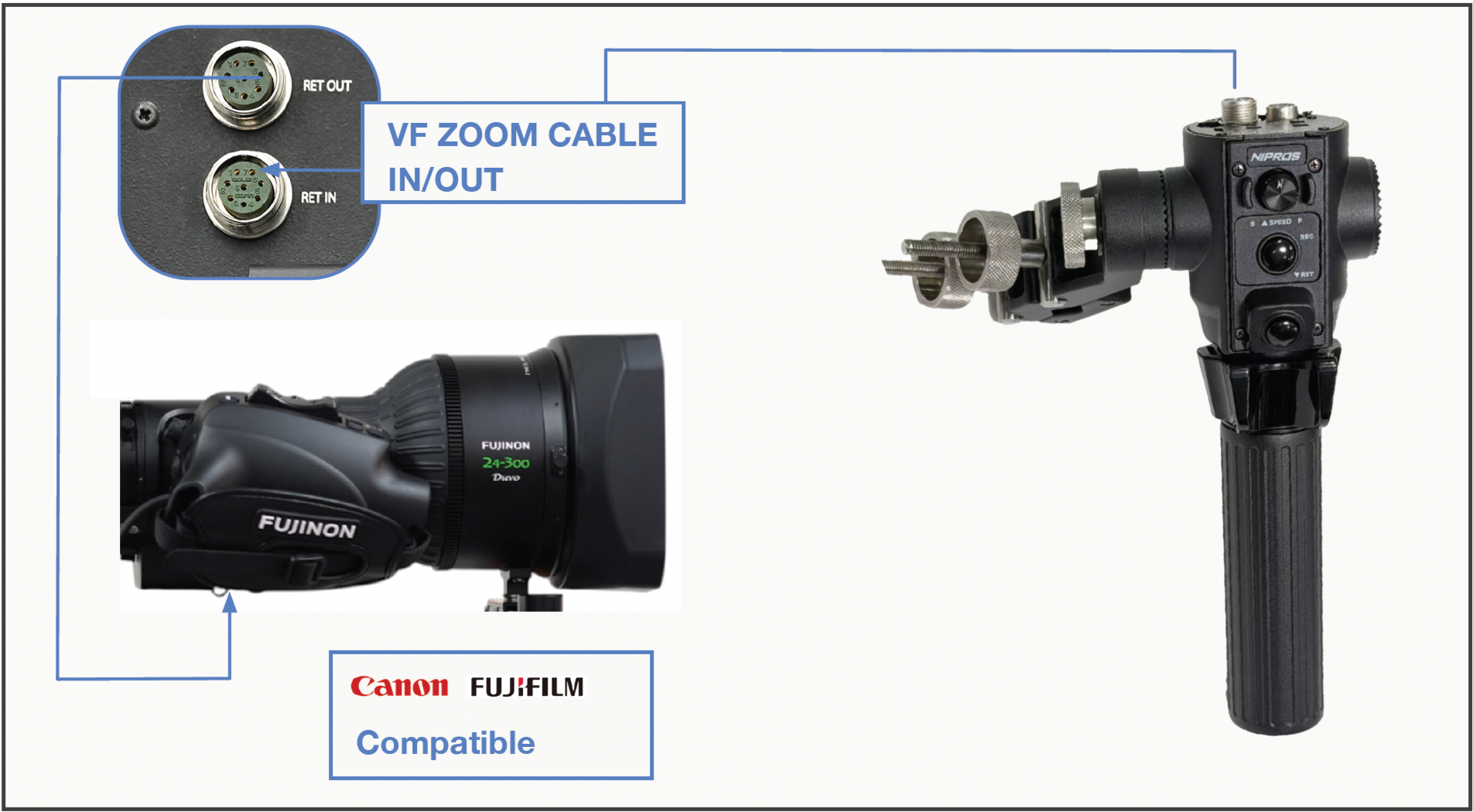
The system can also instantaneously switch between camera output and a program return input via a unique zoom demand in / out. Simply connect the cable of a zoom demand and it passes through the VF on the way to the lens.
Dual side handles protect the monitor and allow for on-the-fly repositioning, and tactile physical controls allow quick changes to brightness, contrast, and peaking without looking away from the screen. The system integrates into existing setups using the optional quick-release bracket for one-touch mounting, and different size sun shades.

HDF-EL777
OLED Studio Viewfinder
True 10bit OLED VF for all cameras
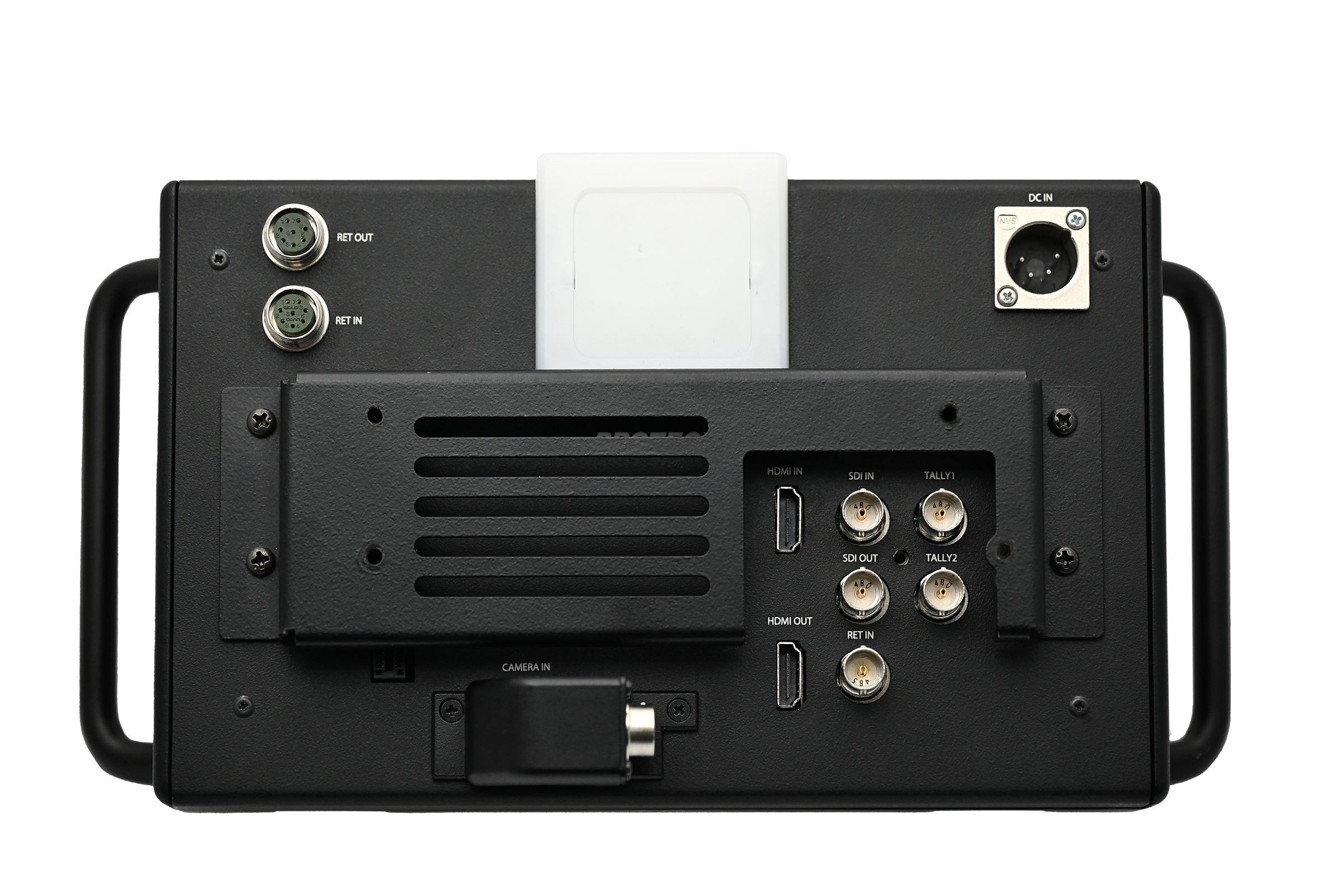
A studio viewfinder that transforms any camera into a live studio platform
-

Broadcast System Controls & Integrations
Dedicated control dials & quick menu navigation to adjust markers, brightness, peaking and contrast at the speed of production.
-
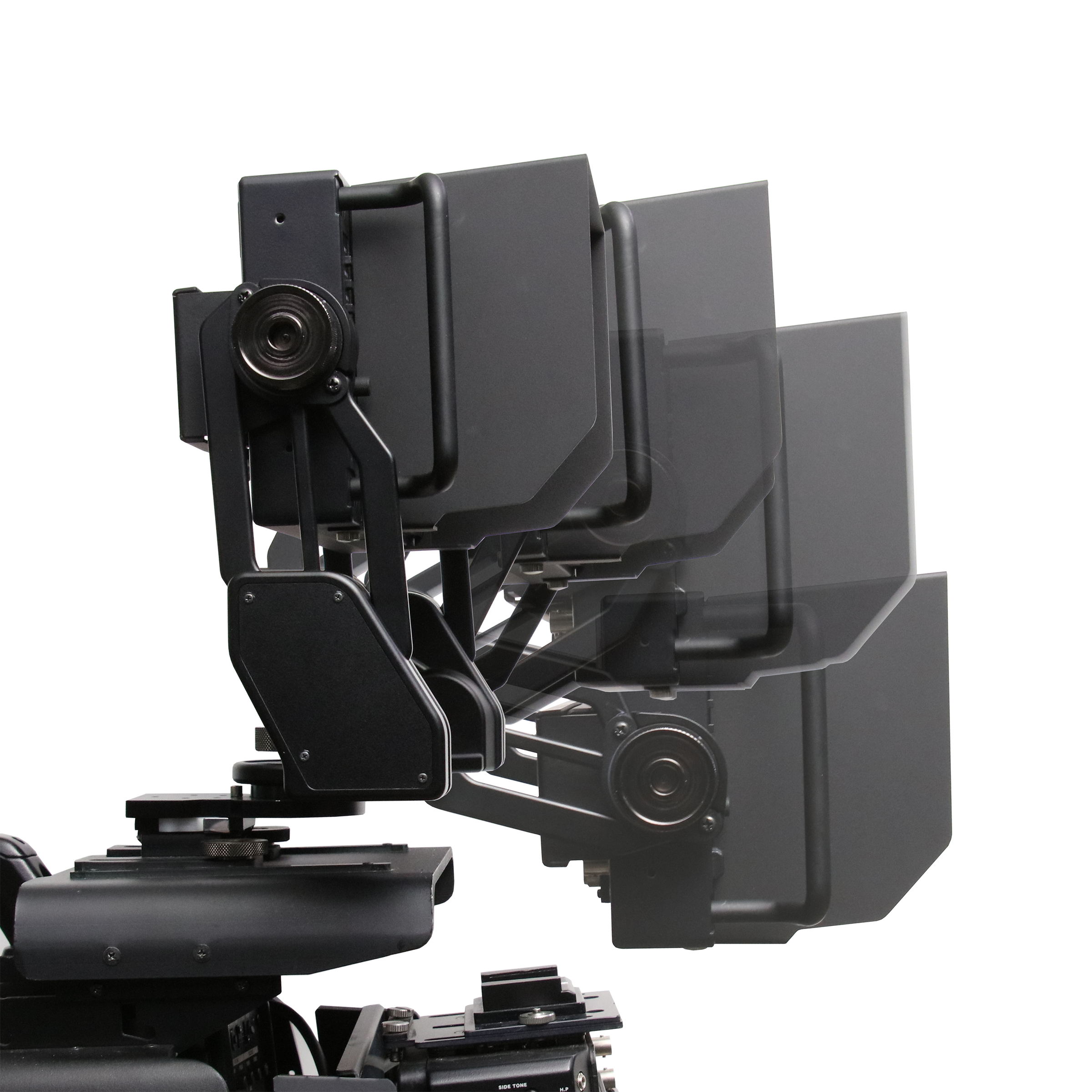
Ergonomic Mounting Systems
Three levels of universal mounting systems can make any camera into a full broadcast camera channel system.
Viewfinder Specifications
-
Panel Type
RGB OLED
Display Size
7.4" / 17.8 cm
Screen Resolution
1280 × 800
Inputs
1x NIPROS 20-pin Input (to Fiber Optic Camera Adapter)
1x 3G-SDI Input
1x BNC (3G-SDI) SDI Through Out
1x HDMI Video Input
Outputs
1x BNC (3G-SDI) Video Monitor Output
1x HDMI Through Out
Power
1x XLR 4-Pin Power Input
Tally
1x BNC Tally Input (Voltage Type / “Wet”)
-
Panel Type
Display Size 7.4"
Active Area 6 x 3" / 151 x 85 mm
Screen Resolution 1920 x 1080
Aspect Ratio 16:9
Viewing Angle 170°
Touchscreen No
Maximum Brightness 350 nits / cd/m2
Color Support 16.7 Million Colors (10bit)
Pixels Per Inch (ppi) 315 ppi
Finish Glossy
-
Inputs/Outputs
1x NIPROS 20-pin Power / Video / tally
1x 3G-SDI Input
1x 3G-SDI Thru Out
1x HDMI Input
1x HDMI Output
1x XLR 4-Pin Power Input
1x BNC Tally Input -
SDI (10-Bit 4:2:2 YUV)
1080p: 59.94/50/29.97/25/24/23.98
1080i: 59.94/50
1080PsF: 29.97/25/24/23.98
720p: 59.94/50 -
12W
HDF-777 Zoom Demand Return Pass-through
Zoom Demand Connects to Servos Through VF.
HDF-777 Simple Return Toggle
-
Broadcast Zoom Demands and Lens servo grips feature the crucial RET toggle buttons, allowing the operator to rapidly switch between the SDI overlay feed, a clean full-frame feed, and the show program feed sent from the switcher. HDF Series allows hybrid "cine-live" systems to behave in the classic manner by switching between Monitor input and a zero-latency RET feed provided by the Camera Adapter. SDI output toggles between the Mon signal and RET feeda a serial trigger sent from the zoom demand looping through the Viewfinder via a single cable. Using either NIPROS AS-1PRO zoom demands or Canon or Fujinon compatible demands, the output connector on the VF Monitor will control the zoom zervo motors exactly as if it were connected directly to the zoom demand, without any latency.
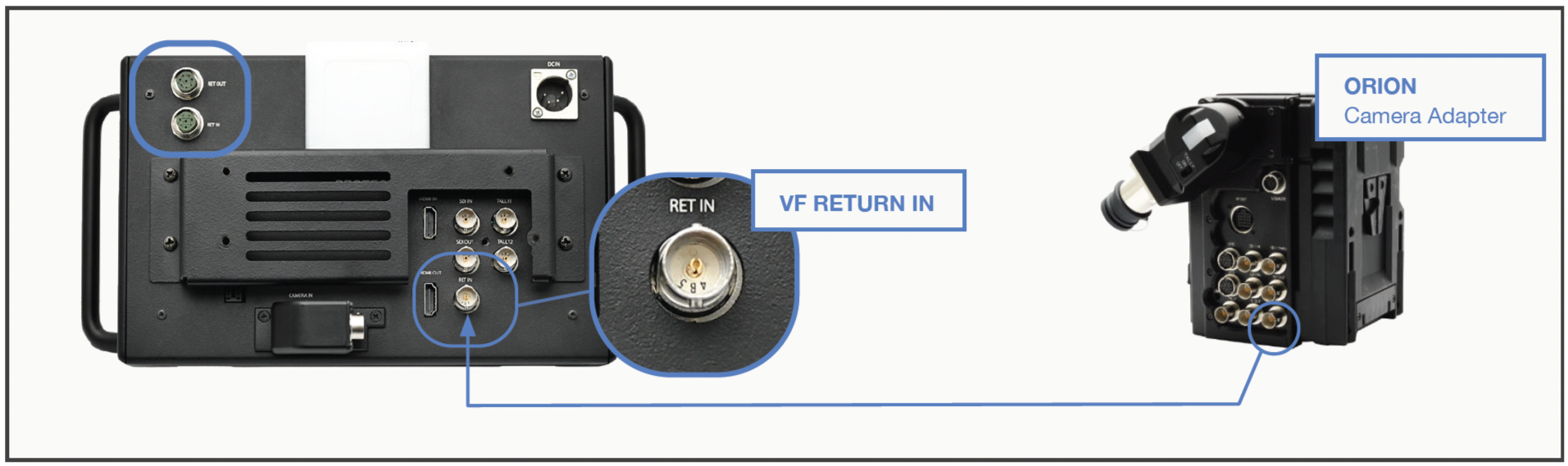
2. Zoom Demand connects to VF, loops out to lens